
JournalHistory
A short history of kanna
Millennia of use by San and Khoi peoples, three and a half centuries of written reports, and a 2010 permit that set terms for sharing the benefits.
By the THRYVE team4 min read
Before anything was written
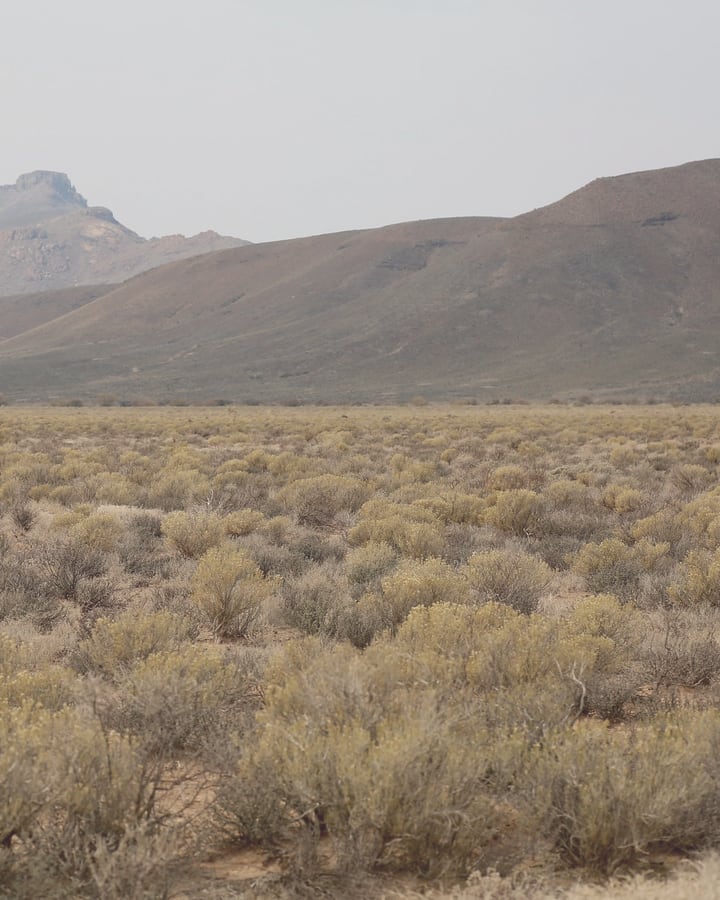
For millennia, San hunter-gatherers and Khoi pastoralists used kanna: against thirst, hunger and fatigue, as a medicine, and for social and spiritual purposes.12 That use came first by a very long way. It is far older than the earliest written reports by European explorers and settlers.1
Much of what those communities knew was never written down, and much of it was lost.1 Conflict with settlers, genocidal raids against the San, loss of land, introduced diseases and acculturation eroded the San and Khoi oral knowledge of kanna over the last three centuries.1
The first written reports
The first documented reports of kanna come from Van Riebeeck, in about 1660, and describe it as an item of Khoi trade.3
In 1685, Governor Simon van der Stel's expedition to Namaqualand painted the plant.32 The expedition's journal says the Nama gathered it in October, called it Canna, and held it in great esteem.32
In 1692 Commelin described its traditional use as a masticatory, something chewed, and around 1770 Thunberg described it being chewed as well.3
In 1738, Kolben called kanna the "greatest Chearer of the Spirits, and the noblest Restorative in the World".*3 It is a period quotation, and we print it as one: an observer's praise, not a finding.
The Afrikaans names kougoed and kauwgoed, chew-stuff, were first recorded in about 1830.3 About 170 years separate the first report from the first record of the Afrikaans name, and that name means chew-stuff.3
How it was prepared
Kanna was traditionally prepared by crushing the plant, sealing it in a bag and leaving it in the hot sun for eight days, then drying it.34 It was chewed, and it has also been smoked, taken as a tea or made into a tincture.564 The traditional uses recorded were practical ones: against thirst, hunger and fatigue, as a medicine, and in social and spiritual life.1
Reading the record
The record is uneven. Its earliest entries are a few lines by European explorers and settlers; the knowledge they describe belonged to the people they were describing, and most of it was never written down by them.1 Each date on the heritage page carries its source, so you can see which is which.
What the names record
Each name records a speaker. Kanna is the plant's Nama name, which the 1685 journal spells Canna.63 Kougoed is Afrikaans, from kou, to chew, and goed, stuff.3 Sceletium is its English name.3
The research era
In 1996, a review that reassembled 300 years of written records found no evidence that kanna or its alkaloids are hallucinogenic.4 In 2008, a review update reported that wild kanna had been severely diminished by over-harvesting, poor veld management and possibly plant diseases.1
Laboratory work followed. In assays published in 2011, a kanna extract blocked the serotonin transporter and inhibited the enzyme PDE4.*7 The human studies cited here start in 2013, with two placebo-controlled studies of that extract, Zembrin: brain imaging in 16 healthy adults after a single 25 mg dose, and a 3-month tolerability trial in 37 healthy adults on 8 or 25 mg a day.89
Studies of thinking tests, brain activity and reaction time followed between 2014 and 2020.10611 Every human study cited on these pages was placebo-controlled, small (60 people or fewer), short (one dose to 3 months) and in healthy adults, and four of the five used Zembrin.58910611 A review published in 2021 gathered the plant's taxonomy, history, chemistry, safety and regulation in one place.3
Who benefits from the plant
In South Africa, commercial bioprospecting of an indigenous plant needs a permit, and the benefits of indigenous knowledge must be shared.123 The rules sit in South African law, NEMBA, which covers bioprospecting, access and benefit-sharing for indigenous plants; its Chapter 6 deals with them.312
In 2010 the country issued its first bioprospecting permit for a kanna extract, to one company, with a royalty-sharing agreement.12 The beneficiaries named were the South African San Council and the Paulshoek and Nourivier Nama communities.13 The permit allowed that company to produce and export Zembrin, the extract most of the human studies used.12
That agreement covers that company's extract, not ours.12 Whether our supplier holds a permit and shares benefits is a question we have put to it. When we have the documents, they are summarized here; until then, we will not imply that it does.
Who should not take it
The pouch is specific about this, and we quote it in full.
ADULTS 21+
WARNING: Effects vary by individual.
Do not use if you take an SSRI, SNRI, MAOI, tricyclic antidepressant, triptan, or any other medication that affects serotonin.
Consult a physician before use if you take any prescription medication, have a medical condition, or are pregnant or nursing.
Keep out of reach of children.
A review published in 2021 found no reports to date of severe adverse reactions or herb-drug interactions, and still advises caution with medication of the kind the second warning line names; it also flags medicines that act on the enzyme PDE4.3
* Marks a statement about what kanna or its alkaloids did in published research, or how a historical writer described it. None of it is a claim about this product.
[?]These statements made have not been evaluated by the Food and Drug Administration. This product is not intended to diagnose, treat, cure, or prevent any disease.
References
Numbered in the order each source is first cited on this page. Titles are printed as their publishers printed them.
- Gericke N, Viljoen AM (2008). Sceletium--a review update. Journal of Ethnopharmacology 119(3):653-663. doi:10.1016/j.jep.2008.07.043 Back to the text
- Manganyi MC, Bezuidenhout CC, Regnier T, Ateba CN (2021). A Chewable Cure "Kanna": Biological and Pharmaceutical Properties of Sceletium tortuosum. Molecules 26(9):2557. doi:10.3390/molecules26092557 Back to the text
- Brendler T, Brinckmann JA, Feiter U, Gericke N, Lang L, Pozharitskaya ON, Shikov AN, Smith M, Van Wyk BE (2021). Sceletium for Managing Anxiety, Depression and Cognitive Impairment: A Traditional Herbal Medicine in Modern-Day Regulatory Systems. Current Neuropharmacology 19(9):1384-1400. doi:10.2174/1570159X19666210215124737 Back to the text
- Smith MT, Crouch NR, Gericke N, Hirst M (1996). Psychoactive constituents of the genus Sceletium N.E.Br. and other Mesembryanthemaceae: a review. Journal of Ethnopharmacology 50(3):119-130. doi:10.1016/0378-8741(95)01342-3 Back to the text
- Olatunji TL, Siebert F, Adetunji AE, Harvey BH, Gericke J, Hamman JH, Van der Kooy F (2022). Sceletium tortuosum: A review on its phytochemistry, pharmacokinetics, biological, pre-clinical and clinical activities. Journal of Ethnopharmacology 287:114711. doi:10.1016/j.jep.2021.114711 Back to the text
- Dimpfel W, Gericke N, Suliman S, Chiegoua Dipah GN (2016). Psychophysiological Effects of Zembrin® Using Quantitative EEG Source Density in Combination with Eye-Tracking in 60 Healthy Subjects. A Double-Blind, Randomized, Placebo-Controlled, 3-Armed Study with Parallel Design. Neuroscience and Medicine (Scientific Research Publishing) 7(3):114-132. doi:10.4236/nm.2016.73013 Back to the text
- Harvey AL, Young LC, Viljoen AM, Gericke NP (2011). Pharmacological actions of the South African medicinal and functional food plant Sceletium tortuosum and its principal alkaloids. Journal of Ethnopharmacology 137(3):1124-1129. doi:10.1016/j.jep.2011.07.035 Back to the text
- Terburg D, Syal S, Rosenberger LA, Heany S, Phillips N, Gericke N, Stein DJ, van Honk J (2013). Acute effects of Sceletium tortuosum (Zembrin), a dual 5-HT reuptake and PDE4 inhibitor, in the human amygdala and its connection to the hypothalamus. Neuropsychopharmacology 38(13):2708-2716. doi:10.1038/npp.2013.183 Back to the text
- Nell H, Siebert M, Chellan P, Gericke N (2013). A randomized, double-blind, parallel-group, placebo-controlled trial of Extract Sceletium tortuosum (Zembrin) in healthy adults. Journal of Alternative and Complementary Medicine 19(11):898-904. doi:10.1089/acm.2012.0185 Back to the text
- Chiu S, Gericke N, Farina-Woodbury M, Badmaev V, Raheb H, Terpstra K, Antongiorgi J, Bureau Y, Cernovsky Z, Hou J, Sanchez V, Williams M, Copen J, Husni M, Goble L (2014). Proof-of-Concept Randomized Controlled Study of Cognition Effects of the Proprietary Extract Sceletium tortuosum (Zembrin) Targeting Phosphodiesterase-4 in Cognitively Healthy Subjects: Implications for Alzheimer's Dementia. Evidence-Based Complementary and Alternative Medicine 2014:682014. doi:10.1155/2014/682014 Back to the text
- Hoffman JR, Markus I, Dubnov-Raz G, Gepner Y (2020). Ergogenic Effects of 8 Days of Sceletium Tortuosum Supplementation on Mood, Visual Tracking, and Reaction in Recreationally Trained Men and Women. Journal of Strength and Conditioning Research 34(9):2476-2481. doi:10.1519/JSC.0000000000003693 Back to the text
- SAnews (South African Government News Agency) (2010). 10 000 San to benefit from bio-prospecting license. SAnews, Government of South Africa (4 October 2010). www.sanews.gov.za/node/7216 Back to the text
- Sonjica B (Minister of Water and Environmental Affairs, South Africa) (2010). Speech at the handing over of the first bioprospecting permit to HGH Pharmaceuticals at Khwa Ttu San Cultural and Education Centre (1 October 2010). South African Government (gov.za). www.gov.za/news/speeches/speech-ms-buyelwa-sonjica-mp-minister-water-and-environmental-affairs-handing-over Back to the text