
Science
Kanna, as far as the research goes.
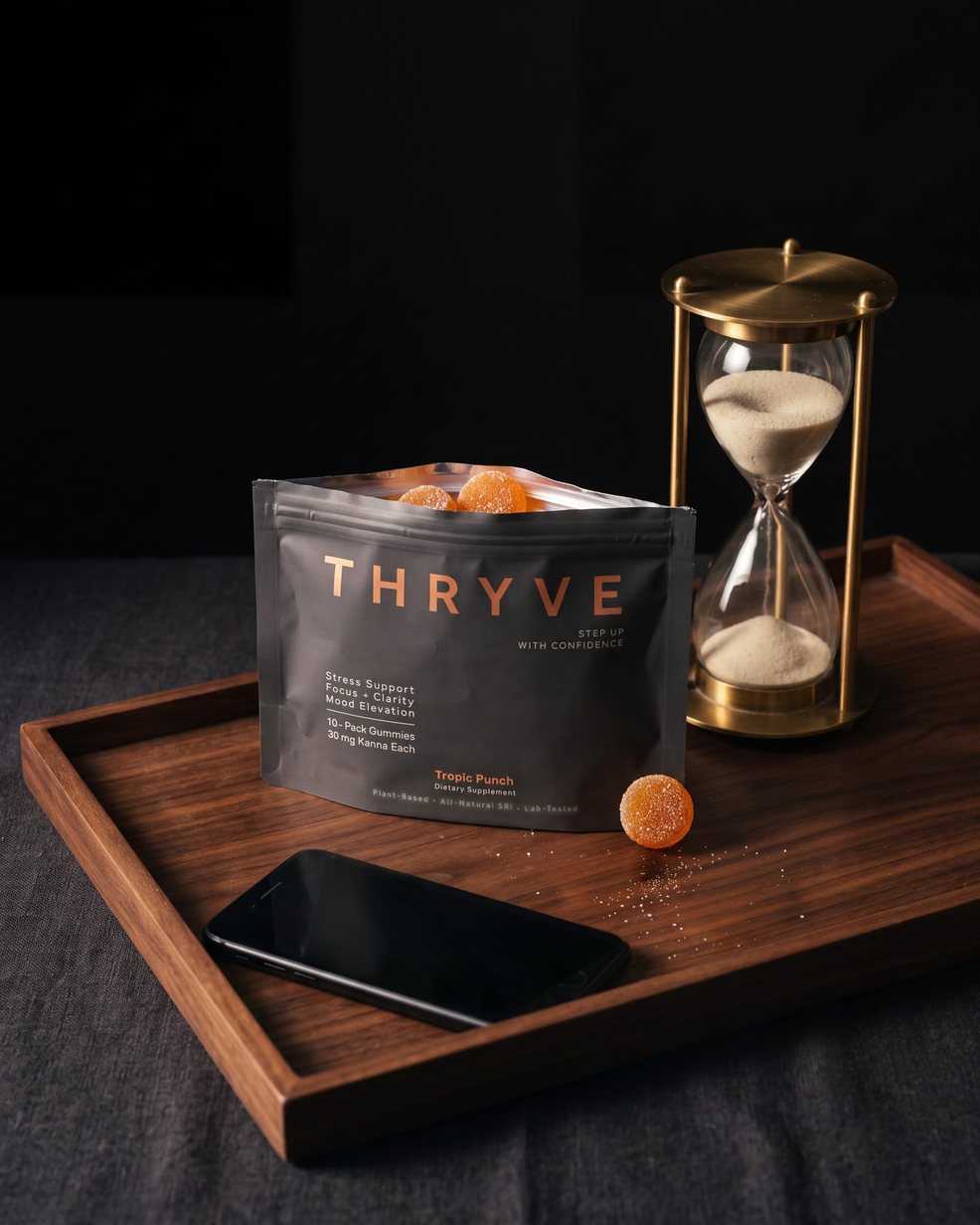
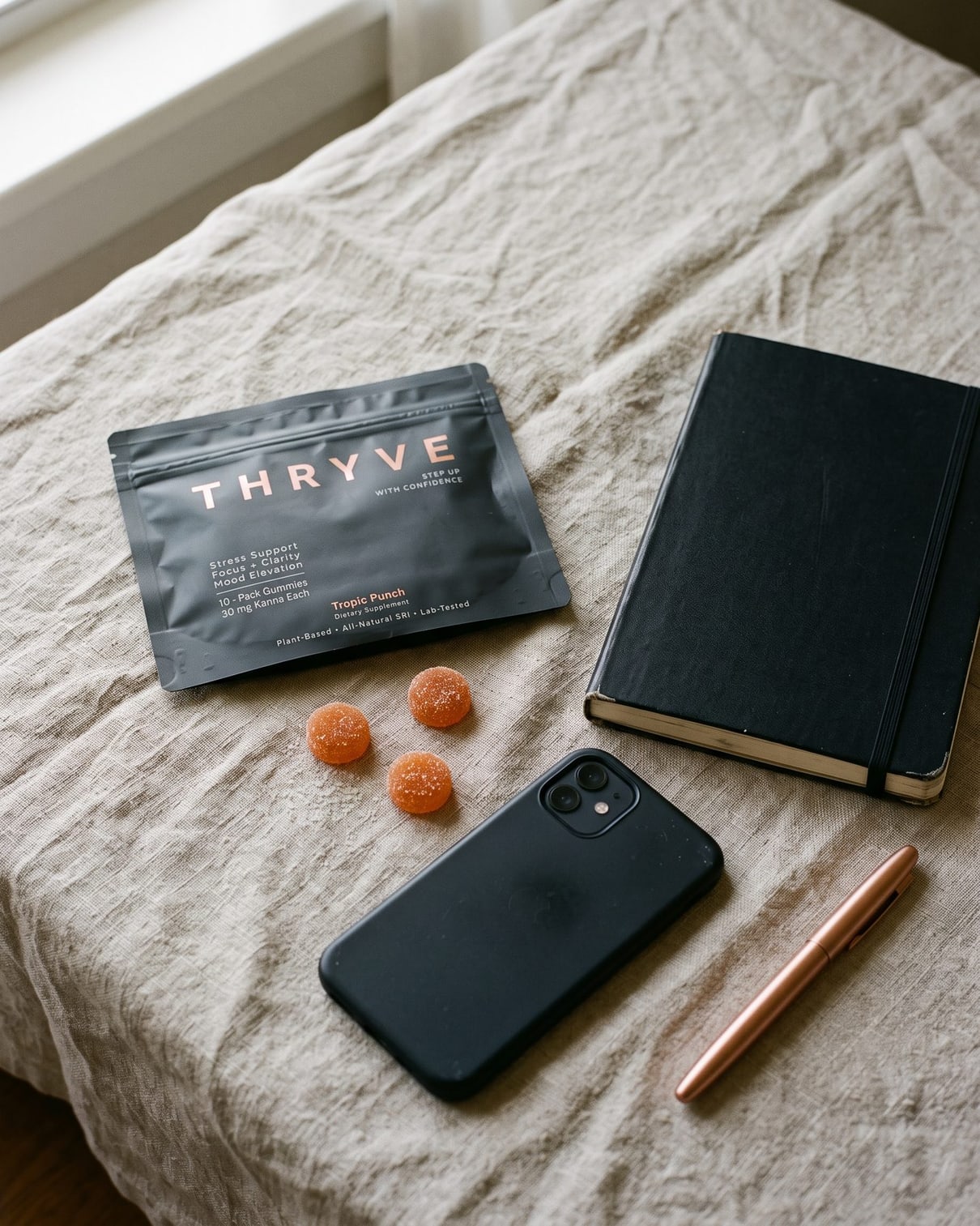
Kanna is Sceletium tortuosum, a succulent herb native to South Africa's Western and Northern Cape.1 San and Khoi peoples used it for millennia before the first written reports by European explorers and settlers.23 Its active compounds are alkaloids, most of them of the mesembrine type.4 THRYVE has one active, Kanna Extract at 5% alkaloids, 30 mg in each gummy, and the studies on these pages did not test it.5
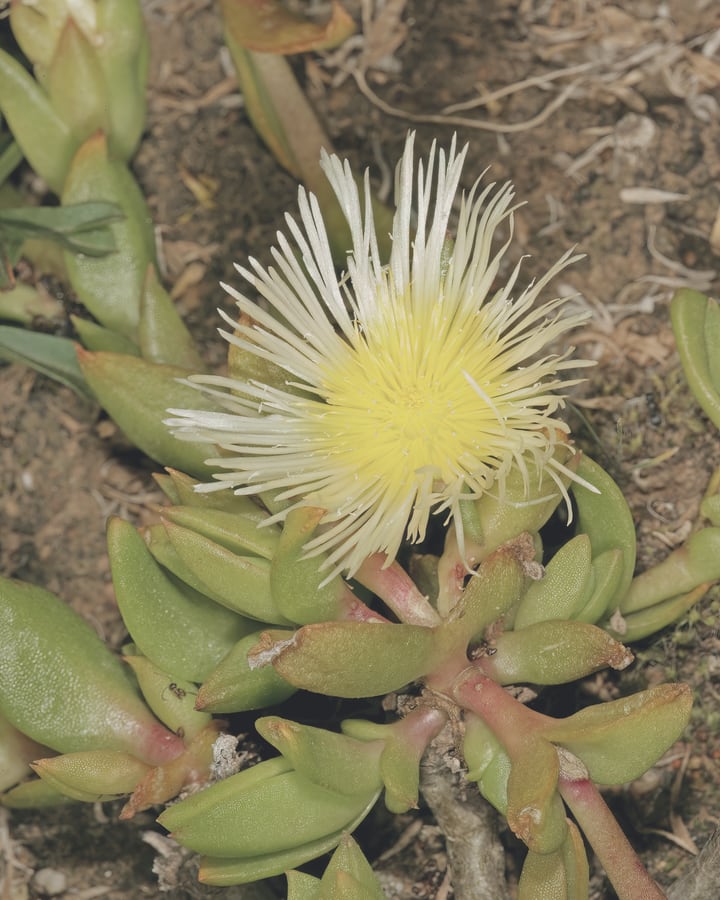
- The plantSceletium tortuosumA short-lived succulent with a creeping habit, from the karroid regions of the Cape.1Its heritage
- The alkaloids25 identifiedIn four structural classes; the mesembrine class is the main one.4The ingredients
- The dose30 mg a gummyKanna Extract at 5% alkaloids, as the label prints it.5How it's made
Five pages, each with its sources
- IngredientsOne active at 30 mg, then the 10 ingredients that make it a gummy.
- How it's madeSix steps from the plant to the lab report; the supplier's steps stay open until we have its documents.
- How kanna comparesCoffee, alcohol, CBD and kava on six rows, every figure with its source, and no verdict.
- HeritageMillennia of use, first written down in about 1660.21
- JournalFour articles, each with numbered references and the pouch's warning in full.

What research found
Small studies, read at their actual size.
Every human study cited on these pages was placebo-controlled, small (60 people or fewer), short (one dose to 3 months) and in healthy adults, and four of the five used one branded extract, Zembrin, while the fifth does not name its extract.4678910 None tested a THRYVE gummy.5
In laboratory assays, a kanna extract blocked the serotonin transporter and inhibited the enzyme PDE4.*11
| Year | Design | People | Length | Extract | What it found |
|---|---|---|---|---|---|
| 2013 | Double-blind, placebo-controlled crossover; brain imaging (fMRI) | 16 healthy adults | One dose; scanned 2 hours later | Zembrin, 25 mg | Lower amygdala reactivity to fearful faces, under low perceptual load, than on placebo.*6 |
| 2014 | Randomized, double-blind, placebo-controlled crossover | 21 healthy adults, mean age 54.6 | 3 weeks a phase, once daily | Zembrin, 25 mg | Better set-shifting and executive-function scores than on placebo.*8 |
| 2016 | Double-blind, randomized, placebo-controlled; three parallel groups; EEG | 60 healthy adults | One dose | Zembrin, 25 or 50 mg | Changes in EEG activity during mental tasks, against placebo.*9 |
| 2013 | Randomized, double-blind, placebo-controlled; parallel groups; tolerability only | 37 healthy adults | 3 months, once daily | Zembrin, 8 or 25 mg | Both doses well tolerated; it did not measure any benefit.7 |
None of these studies tested a THRYVE gummy, and a study's milligrams describe its own extract, not ours.5 They report what research found about kanna's alkaloids, and that is all we use them for.
How kanna acts, in full3rd PARTY TESTED
One batch, one report.
Each order lists the batch of its pouches. The lab portal holds the report for that batch, on a site that sells nothing.
- Scan the QR on the back of the pouch.
- Or use the batch code from your order. Its format is TH-YYMM-NN.
- Read the lab report for that batch.

* Marks a statement about what kanna or its alkaloids did in published research, or how a historical writer described it. None of it is a claim about this product.
[?]These statements made have not been evaluated by the Food and Drug Administration. This product is not intended to diagnose, treat, cure, or prevent any disease.
References
Numbered in the order each source is first cited on this page. Titles are printed as their publishers printed them.
- Brendler T, Brinckmann JA, Feiter U, Gericke N, Lang L, Pozharitskaya ON, Shikov AN, Smith M, Van Wyk BE (2021). Sceletium for Managing Anxiety, Depression and Cognitive Impairment: A Traditional Herbal Medicine in Modern-Day Regulatory Systems. Current Neuropharmacology 19(9):1384-1400. doi:10.2174/1570159X19666210215124737 Back to the text
- Gericke N, Viljoen AM (2008). Sceletium--a review update. Journal of Ethnopharmacology 119(3):653-663. doi:10.1016/j.jep.2008.07.043 Back to the text
- Manganyi MC, Bezuidenhout CC, Regnier T, Ateba CN (2021). A Chewable Cure "Kanna": Biological and Pharmaceutical Properties of Sceletium tortuosum. Molecules 26(9):2557. doi:10.3390/molecules26092557 Back to the text
- Olatunji TL, Siebert F, Adetunji AE, Harvey BH, Gericke J, Hamman JH, Van der Kooy F (2022). Sceletium tortuosum: A review on its phytochemistry, pharmacokinetics, biological, pre-clinical and clinical activities. Journal of Ethnopharmacology 287:114711. doi:10.1016/j.jep.2021.114711 Back to the text
- THRYVE (client) (2026). THRYVE kanna gummies pouch: front, Supplement Facts, directions, warning. Back to the text
- Terburg D, Syal S, Rosenberger LA, Heany S, Phillips N, Gericke N, Stein DJ, van Honk J (2013). Acute effects of Sceletium tortuosum (Zembrin), a dual 5-HT reuptake and PDE4 inhibitor, in the human amygdala and its connection to the hypothalamus. Neuropsychopharmacology 38(13):2708-2716. doi:10.1038/npp.2013.183 Back to the text
- Nell H, Siebert M, Chellan P, Gericke N (2013). A randomized, double-blind, parallel-group, placebo-controlled trial of Extract Sceletium tortuosum (Zembrin) in healthy adults. Journal of Alternative and Complementary Medicine 19(11):898-904. doi:10.1089/acm.2012.0185 Back to the text
- Chiu S, Gericke N, Farina-Woodbury M, Badmaev V, Raheb H, Terpstra K, Antongiorgi J, Bureau Y, Cernovsky Z, Hou J, Sanchez V, Williams M, Copen J, Husni M, Goble L (2014). Proof-of-Concept Randomized Controlled Study of Cognition Effects of the Proprietary Extract Sceletium tortuosum (Zembrin) Targeting Phosphodiesterase-4 in Cognitively Healthy Subjects: Implications for Alzheimer's Dementia. Evidence-Based Complementary and Alternative Medicine 2014:682014. doi:10.1155/2014/682014 Back to the text
- Dimpfel W, Gericke N, Suliman S, Chiegoua Dipah GN (2016). Psychophysiological Effects of Zembrin® Using Quantitative EEG Source Density in Combination with Eye-Tracking in 60 Healthy Subjects. A Double-Blind, Randomized, Placebo-Controlled, 3-Armed Study with Parallel Design. Neuroscience and Medicine (Scientific Research Publishing) 7(3):114-132. doi:10.4236/nm.2016.73013 Back to the text
- Hoffman JR, Markus I, Dubnov-Raz G, Gepner Y (2020). Ergogenic Effects of 8 Days of Sceletium Tortuosum Supplementation on Mood, Visual Tracking, and Reaction in Recreationally Trained Men and Women. Journal of Strength and Conditioning Research 34(9):2476-2481. doi:10.1519/JSC.0000000000003693 Back to the text
- Harvey AL, Young LC, Viljoen AM, Gericke NP (2011). Pharmacological actions of the South African medicinal and functional food plant Sceletium tortuosum and its principal alkaloids. Journal of Ethnopharmacology 137(3):1124-1129. doi:10.1016/j.jep.2011.07.035 Back to the text